
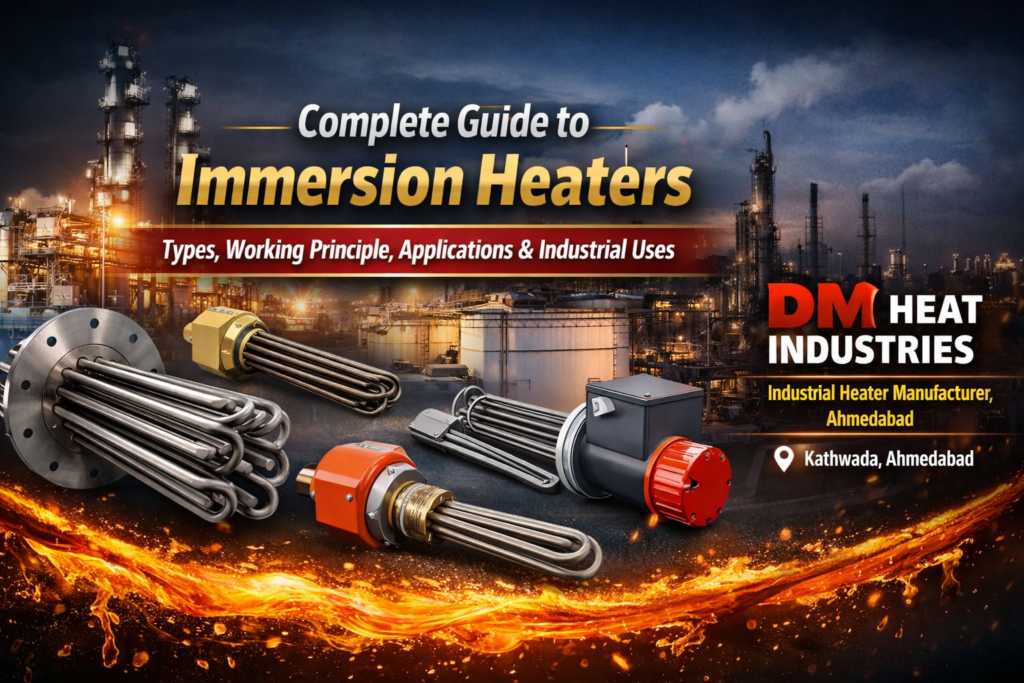

Industrial heating plays a critical role in manufacturing, processing, and energy systems. Among the most efficient heating technologies used worldwide is the immersion heater. These heaters are designed to heat liquids directly by immersing heating elements into the medium, ensuring fast heat transfer, energy efficiency, and precise temperature control.
At DM Heat Industries, a leading industrial heater manufacturer in Ahmedabad located in Kathwada, we design and manufacture high-quality industrial immersion heaters for multiple industries including chemical, oil & gas, pharmaceuticals, water treatment, and food processing.
In this comprehensive guide, we explain types of immersion heaters, working principles, technical design, materials, industrial uses, and advantages.
What is an Immersion Heater?
An immersion heater is an electric heating device placed directly inside liquids or substances to heat them quickly and efficiently. The heating element converts electrical energy into heat and transfers it directly to the surrounding medium.
Unlike external heating systems, immersion heaters provide:
• Faster heating
• Higher efficiency
• Lower energy loss
• Precise temperature control
These heaters are commonly used for heating:
- Water
- Oil
- Chemicals
- Solvents
- Fuel
- Process liquids
- Industrial tanks
Working Principle of Immersion Heater
The immersion heater works on the Joule Heating Principle.
When electric current flows through the resistive heating element, electrical energy converts into heat energy.
Basic Heating Process
- Electrical current passes through the heating coil.
- Resistance generates heat.
- Heat transfers to the metal sheath.
- Heat spreads into the surrounding liquid.
The heating element is typically insulated with magnesium oxide powder and enclosed in a stainless steel, copper, or Incoloy sheath for durability and corrosion resistance.
Technical Components of an Immersion Heater
A typical industrial immersion heater includes the following components:
Heating Element
Usually made from Nichrome wire or other high-resistance alloys.
Metal Sheath
Protects the heating coil from corrosion and direct liquid contact.
Common materials include:
- Stainless Steel
- Copper
- Incoloy
- Titanium
Insulation Material
Magnesium Oxide (MgO) is used for high thermal conductivity and electrical insulation.
Terminal Enclosure
Provides electrical connection and protects wiring.
Flange or Screw Plug
Used for mounting heaters in tanks or pipelines.
Types of Immersion Heaters
Different industrial processes require different heater designs. The most common types include:
1. Screw Plug Immersion Heater
This heater is mounted using a threaded plug.
Features
• Compact design
• Easy installation
• Ideal for small tanks
Applications
- Oil heating
- Water heating
- Chemical processing
- Boiler systems
2. Flanged Immersion Heater
A flanged immersion heater is designed for large tanks and industrial heating systems.
Features
• High heating capacity
• Industrial grade construction
• Suitable for large volumes
Applications
- Chemical tanks
- Petroleum industry
- Water treatment plants
- Power plants
3. Over-the-Side Immersion Heater
These heaters hang over the side of a tank and do not require drilling or mounting.
Features
• Portable design
• Easy maintenance
• Ideal for temporary heating needs
Applications
- Electroplating tanks
- Chemical baths
- Laboratory heating
4. Circulation Immersion Heater
Used when liquids need continuous heating while flowing through pipelines.
Features
• High efficiency heating
• Controlled temperature
• Uniform heat distribution
Applications
- Oil heating
- Fuel systems
- Industrial pipelines
5. Tank Immersion Heater
Specifically designed for large storage tanks.
Features
• Heavy-duty construction
• High watt density
• Industrial durability
Applications
- Storage tanks
- Chemical processing
- Industrial fluid heating
Materials Used in Industrial Immersion Heaters
Selecting the right material ensures long life and corrosion resistanc e.
Common sheath materials include:
| Material | Usage |
|---|---|
| Copper | Water heating |
| Stainless Steel | Food & chemical industry |
| Incoloy | High temperature fluids |
| Titanium | Corrosive chemicals |
Advantages of Immersion Heaters
Immersion heaters are widely preferred in industrial heating because of the following benefits:
High Energy Efficiency
Heat transfers directly to the liquid without significant loss.
Fast Heating
Direct contact ensures rapid temperature increase.
Precise Temperature Control
Compatible with thermostats and digital controllers.
Easy Installation
Can be installed in tanks, pipelines, and vessels.
Low Maintenance
Durable materials ensure long operational life.
Industrial Applications of Immersion Heaters
Immersion heaters play a crucial role in multiple industries.
Chemical Industry
Used for heating:
- Chemical reactors
- Processing tanks
- Acid solutions
- Solvents
Oil and Gas Industry
Important for heating:
- Crude oil
- Fuel oil
- Lubricants
- Storage tanks
Pharmaceutical Industry
Provides controlled heating for:
- Drug processing
- Chemical reactions
- Sterilization
Food Processing Industry
Used for:
- Oil heating
- Dairy processing
- Sugar production
- Beverage processing
Water Treatment Industry
Immersion heaters are used in:
- Water heating
- Wastewater treatment
- Industrial cleaning systems
Electroplating Industry
Maintains temperature of chemical baths for metal coating processes.
Why Choose DM Heat Industries for Industrial Immersion Heaters?
DM Heat Industries is a trusted industrial heater manufacturer in Ahmedabad, located in Kathwada Industrial Area.
We specialize in manufacturing custom industrial heating solutions for various industries.
Our Key Strengths
• Custom designed immersion heaters
• High-quality heating elements
• Corrosion-resistant materials
• Energy efficient designs
• Fast delivery across India
• Competitive pricing
Our heaters are widely used in chemical plants, oil refineries, pharmaceutical companies, food industries, and water treatment facilities.